
Colorful Clothing Adds Fresh Personality To Every Fashion Collection

Color plays an exciting role in fashion by bringing energy, creativity, and individuality into everyday dressing. Bright shades, gentle pastels, rich tones, and playful patterns help transform simple outfits into expressive combinations. Colorful clothing offers endless opportunities to explore personal preferences while refreshing an existing wardrobe. With thoughtful combinations and versatile designs, fashion enthusiasts can create attractive looks that feel cheerful, sophisticated, and perfectly suited to different moods and occasions.

Vibrant Colors Create Eye-Catching Outfits

Bold colors can instantly add character to a fashion collection. Shades such as coral, emerald, turquoise, and sunshine yellow create lively appearances, while deeper tones introduce richness and elegance. Combining these colors with complementary pieces helps create outfits that feel balanced and visually appealing.

  • Bright tops for energetic styling
  • Rich shades for elegant appearances
  • Colorful trousers for distinctive outfits
  • Vibrant dresses for cheerful occasions
  • Playful accessories for extra personality

These options make it easy to introduce fresh colors into everyday clothing while maintaining a coordinated and attractive appearance.

Pastel Shades Offer Soft Sophistication

Pastel colors bring a gentle and refreshing quality to modern fashion. Soft pink, mint green, lavender, and powder blue create subtle combinations that feel elegant without appearing overly dramatic. Their versatility makes them suitable for relaxed outfits, smart casual styling, and graceful occasion wear.

Pairing pastel garments with neutral shades creates a harmonious appearance, while combining different pastels introduces a delicate sense of creativity.

Creative Color Combinations Express Individuality

Thoughtful color coordination allows individuals to develop a distinctive personal style. Complementary shades create visual harmony, while contrasting colors introduce energy and make individual clothing pieces stand out beautifully.

  • Blue paired with warm orange
  • Green combined with soft beige
  • Pink styled alongside classic white
  • Yellow balanced with charcoal grey
  • Lavender coordinated with gentle cream

Experimenting with these combinations encourages creativity and helps make familiar wardrobe essentials feel exciting again.

Patterns Bring Extra Visual Interest

Colorful patterns add movement and personality to clothing collections. Floral prints, geometric shapes, abstract designs, and delicate stripes offer different ways to express individual preferences. These details can transform simple silhouettes into distinctive fashion statements while maintaining comfort and wearability.

Choosing one patterned garment alongside solid-colored pieces creates balance and allows the design to become the outfit’s main attraction. Alternatively, carefully coordinated prints can produce a more expressive appearance.

Versatile Clothing Expands Styling Possibilities

Colorful garments become especially valuable when they coordinate easily with existing wardrobe essentials. A bright shirt can refresh classic trousers, while a colorful jacket can enhance a simple dress or understated outfit.

  • Layering pieces for changing looks
  • Colorful scarves for subtle accents
  • Bright footwear for playful styling
  • Coordinated bags for visual harmony
  • Statement jewelry for individual expression

These additions help create multiple combinations without requiring an entirely new collection.

Quality And Comfort Complete The Look

Attractive colors become even more appealing when paired with comfortable fabrics and thoughtful construction. Soft cotton, breathable materials, flattering cuts, and durable stitching help clothing remain enjoyable to wear while preserving its overall appearance.

Selecting garments that fit comfortably and suit personal preferences ensures that colorful fashion remains practical as well as stylish.

Celebrate Fashion Through Color

Colorful clothing makes personal expression enjoyable by combining creativity, versatility, and visual charm. From vibrant statement pieces to understated pastel combinations, every shade offers opportunities to refresh everyday dressing. By exploring complementary colors, attractive patterns, and comfortable designs, individuals can build a lively fashion collection that reflects confidence, individuality, and lasting style.

Michael Tailors
Phone: +66827318786
Url: https://michaeltailors.com/
Room 1D-09, End of zone – D, G-floors, Mbk center
PathumWan, Bangkok 10330
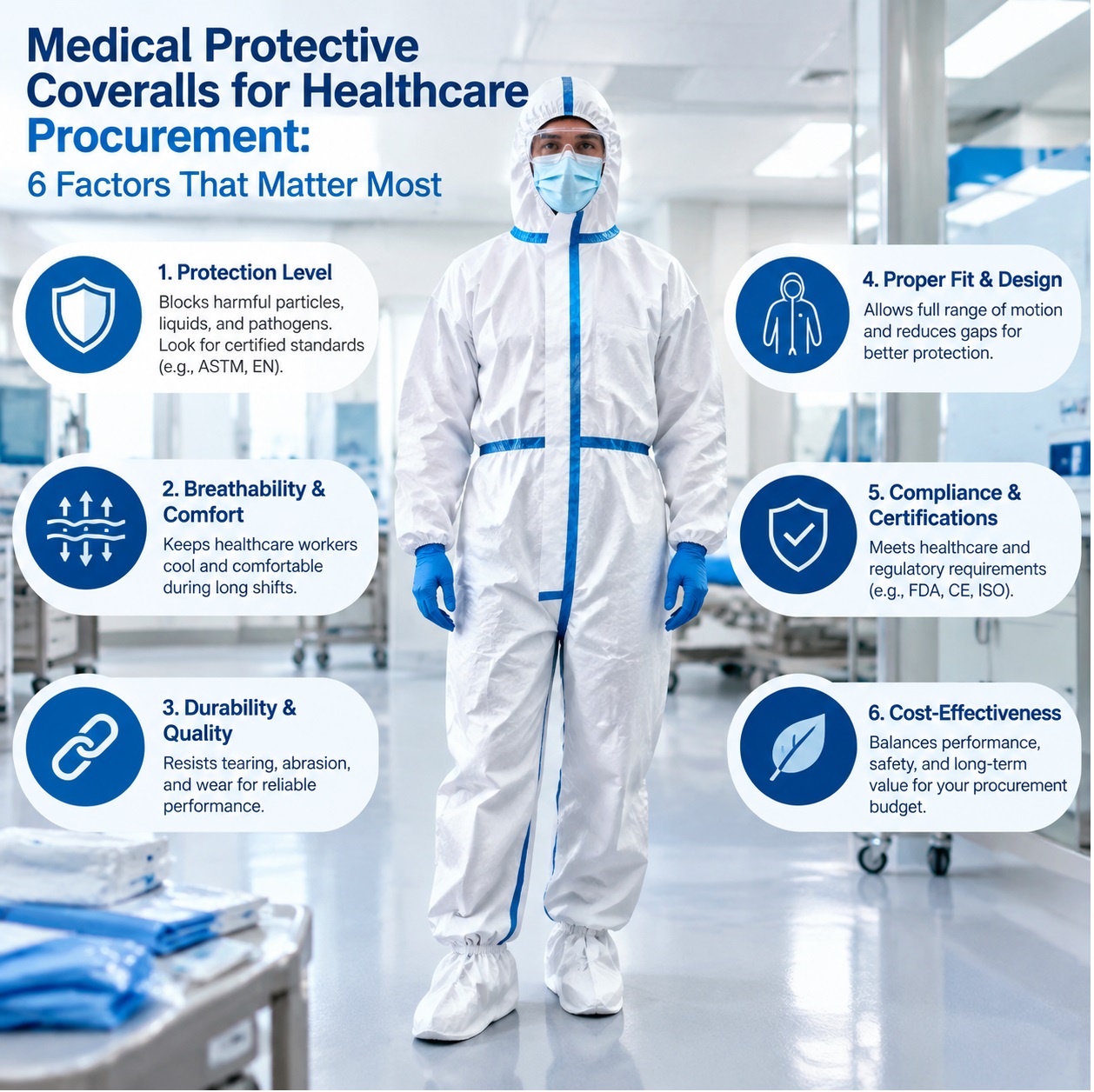
Medical Protective Coveralls for Healthcare Procurement: 6 Factors That Matter Most


Chemical Protective Coverall Nobody gets fired for buying the cheapest coverall on the quote sheet. They just get the phone call three weeks later, when a nurse pulls a torn sleeve out of a linen bin and infection control wants to know who signed the purchase order.

That is the strange thing about this category. Every coverall looks identical in a photo. White or blue, zip up the front, elastic here and there. Put six of them side by side on a table and even experienced buyers squint. The differences live in places you cannot see: the seam tape, the film weight, the breathability numbers, the test report that may or may not have been issued for the exact fabric in the box. By the time those differences show up, the product is already on someone’s body.

So here is what actually separates a coverall you can defend from one you will eventually have to explain.

  1. Match the barrier to the task, not to your anxiety.

The fastest way to waste money in a procurement cycle is to standardize on the highest protection level for every department. It feels safe. It is also how you end up with a warehouse full of Level 4 garments that nobody wants to wear for an eight-hour shift, plus a budget that collapsed in Q2.

Start by mapping where medical protective coveralls are actually used. General ward work, patient transport, low-fluid housekeeping: a lighter SMS or spunbond garment may be entirely appropriate. Emergency departments, ICU, surgical support, any task with meaningful splash or spray risk: now you are in film-laminated or coated territory, and the standard you are buying against needs to be written into the specification, not assumed.

Know which framework your buyers are citing. In the United States, AAMI PB70 levels 1 through 4 dominate gown and coverall discussions. In Europe, EN 14126 for infectious agents sits alongside the Type 3 through Type 6 classifications for liquid and particle protection. These are not interchangeable, and a supplier who cannot tell you precisely which one their garment was tested against is a supplier who has not read their own paperwork.

  1. Seams and closures are where protection quietly dies.

A coverall is a barrier with holes deliberately cut into it. The question is what the manufacturer did about the holes.

Serged seams are stitched and fast. They are fine for dry particle protection and low-risk environments. Taped seams, where a strip of film is heat-sealed over the stitch line, are what you want anywhere liquid is involved. If your specification says “taped seams” and the sample arrives with stitching you can see, that is not a minor deviation. That is a different product.

Then look at the front. A single zipper is a channel. A zipper with a storm flap is a channel with a door. A zipper with a flap plus a self-adhesive or taped closure at the top is what a serious garment looks like. Check the cuffs too. Elastic wrists and ankles are the norm, but the quality of that elastic determines whether the cuff is still snug at hour six or has relaxed into an open sleeve.

If you are evaluating samples, do not just look at them. Fill one with water and hold it over a sink. It is crude and it is remarkably revealing.

  1. Breathability is a compliance problem wearing a comfort costume.

Here is the pattern that repeats in every facility I have worked with. Procurement buys a heavier, cheaper, less breathable coverall because the price per unit looks better. Staff wear it for two shifts, overheat, and start doing things like unzipping to the sternum during breaks, or leaving the hood down, or reusing a garment that was designed for single use. Compliance falls off a cliff, and the savings evaporate.

Heat stress is a documented occupational hazard in coveralls, particularly in non-climate-controlled areas or during long procedures. If a garment traps moisture and heat, your infection control policy now depends on human beings doing the uncomfortable thing for eight hours straight. Most will not.

Ask suppliers for breathability data, not marketing adjectives. Look for moisture vapor transmission rate figures if they exist. If a supplier cannot produce a number, assume the number is bad.

  1. Sizing that accounts for real bodies and real shifts.

Letter sizes on coveralls are close to meaningless across manufacturers. A “Large” from one factory can fit like a Medium from another. For a workforce that is genuinely varied in height and build, that mismatch produces two failure modes: garments so tight that seams strain when the wearer reaches overhead, and garments so oversized that fabric bunches and catches on equipment.

Ask for a full measurement chart in centimeters or inches, not just S through XXL. Check sleeve length and torso length separately, because tall and short staff both get punished by one-size logic. And if your facility has a meaningful number of staff who need extended sizes, confirm those are actually in stock rather than a special order with a twelve-week lead time. Nothing undermines a standardization program faster than the people who cannot get a garment that fits.

  1. Paperwork that survives an audit.

This is the unglamorous factor, and it is the one that decides whether your purchase order becomes a problem later.

For each product, you should be able to obtain: the relevant test reports from an accredited laboratory, the specific standard and classification level, a declaration of conformity, and lot or batch traceability so that a problem in the field can be traced back to a production run. Sterility claims, if applicable, need their own validation and expiry documentation.

Two traps to watch. First, a test report for a fabric is not automatically a test report for the finished garment. Seams and closures change performance, and a garment-level test is what matters. Second, certificates that cannot be tied to a specific production batch are decoration. Ask how you would trace a defective box back to its manufacturing date. The answer tells you a lot about the supplier.

  1. Supply behavior, which is the factor nobody puts on the scorecard.

Price per unit is a snapshot. Supply reliability is the whole film.

Ask about lead times under normal conditions and under strain. Ask about minimum order quantities and whether they flex. Ask what happens when a hospital system three states over suddenly doubles their order. Ask how the product is packed, because a case of 25 loose garments and a case of 25 individually bagged garments are different products for a facility that needs to hand them out at a station. Ask about shelf life and storage conditions, especially for film-laminated products that degrade with heat and UV.

And then do the unglamorous math: cost per use, not cost per box. A cheaper coverall that staff refuse to wear, or that fails at the seam, costs far more than the premium option once you add the replacement order, the incident review, and the credibility hit with your clinical team.

A practical way to run the next tender

Build a short specification before you look at a single quote. Barrier level by department, seam type, closure type, minimum breathability figure, sizing range required, documentation package required, and packaging format. Then score suppliers against that, with price as one column rather than the whole spreadsheet.

Order samples in three sizes and put them on real people for a real shift. Ask the staff who wore them what failed. Their answers will be more useful than any datasheet.

Coveralls are not a commodity, even though the market treats them like one. They are a piece of personal protective equipment standing between a healthcare worker and something they would rather not be exposed to. Procurement gets to decide whether that barrier holds. It is worth the extra week of diligence.

If you are building a specification and want garment-level test data, sizing charts, and batch traceability documentation to review before you commit, ask for it. A supplier who hesitates is telling you something. A supplier who sends it all without being asked is telling you something better.

Modern Powder Packaging Solutions Support Consistent Product Quality

Maintaining consistent product quality is an important goal for powder-based production environments. Modern packaging systems combine accuracy, controlled handling, efficient filling, and dependable sealing to create a smooth packaging experience. Advanced solutions such as https://www.levapack.com/ru/ can support businesses looking for reliable equipment that promotes packaging consistency and efficient production.

Accurate Filling Supports Uniform Products

Precise filling plays a major role in achieving consistent package quantities. Modern powder packaging systems are designed to provide controlled dosing and dependable product movement, helping maintain uniformity across packaged units while supporting efficient production performance.

  • Accurate dosing supports consistent package weights
  • Controlled filling improves product uniformity
  • Precise systems help reduce unnecessary product loss
  • Stable operation supports dependable production quality
  • Flexible filling functions suit varied powder characteristics

Improved Handling Protects Product Quality

Powders can have different flow properties, making careful handling important throughout the packaging process. Well-designed equipment provides controlled product movement and organized handling, helping preserve quality while maintaining a clean and efficient packaging environment.

  • Smooth product flow supports consistent filling
  • Controlled handling reduces unnecessary product disturbance
  • Organized movement encourages reliable packaging
  • Suitable equipment supports different powder textures
  • Efficient handling contributes to better production consistency

Reliable Sealing Enhances Package Integrity

Strong and dependable sealing helps protect packaged powders from external exposure while creating a secure and attractive finish. Consistent sealing performance also supports better presentation and helps maintain product quality during storage and handling.

  • Secure seals support package protection
  • Consistent closure improves packaging reliability
  • Automated sealing encourages uniform results
  • Controlled sealing supports attractive presentation
  • Reliable packaging contributes to customer confidence

Flexible Solutions Support Different Needs

Powder products can vary in texture, density, quantity, and packaging requirements. Flexible packaging systems can accommodate changing production needs while allowing businesses to maintain consistent quality across different package formats and product varieties.

  • Adjustable settings support varied filling requirements
  • Flexible equipment accommodates different package sizes
  • Adaptable systems support changing production volumes
  • Modular designs encourage future operational growth
  • Versatile solutions improve overall packaging efficiency

Automation Strengthens Production Consistency

Automation helps coordinate important packaging functions with greater precision and repeatability. By reducing repetitive manual handling, modern systems can create a more stable workflow while supporting dependable output and consistent product presentation.

  • Automated operations encourage repeatable performance
  • Coordinated functions improve packaging workflow
  • Reduced manual handling supports greater consistency
  • Continuous operation helps maintain steady output
  • Efficient automation improves overall productivity

Hygienic Design Supports Quality Standards

Clean and organized packaging environments are valuable for maintaining product quality. Equipment designed with practical cleaning and maintenance considerations can help support hygienic operations while encouraging reliable performance over extended production periods.

  • Accessible components support convenient cleaning
  • Organized designs promote cleaner operations
  • Smooth surfaces can simplify routine maintenance
  • Reliable construction supports long-term performance
  • Clean workflows encourage consistent packaging quality

Conclusion

Modern powder packaging solutions provide valuable support for businesses focused on consistent product quality and efficient production. Accurate filling, controlled handling, reliable sealing, flexible configurations, automation, and hygienic design work together to create dependable packaging operations. These capabilities help manufacturers maintain uniform products, improve workflow efficiency, and build a strong foundation for continued production success.